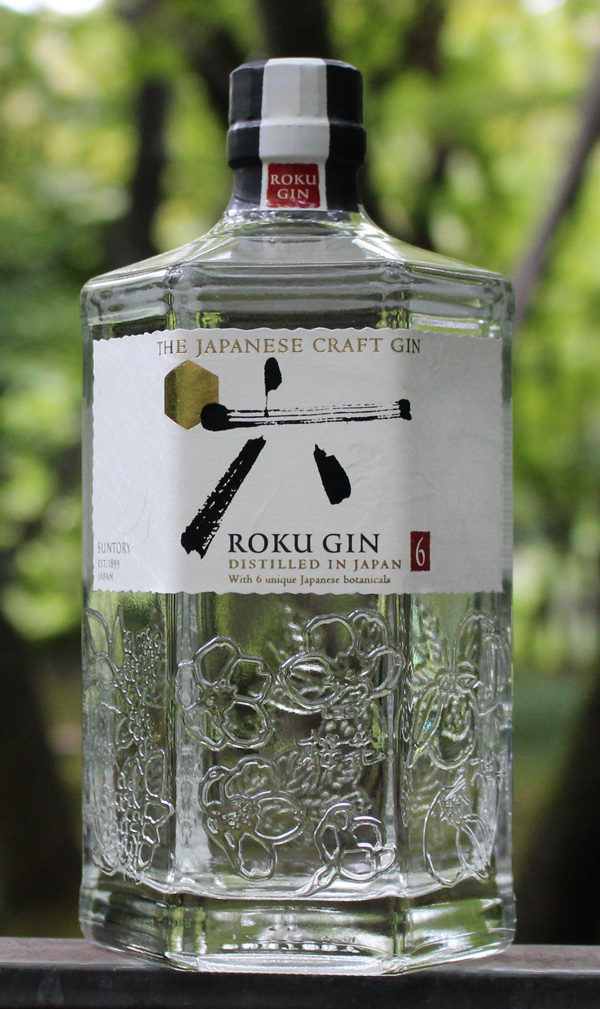

Roku means "six" in Japanese, and the name refers to the six distinctly Japanese botanicals that define this gin's character: sakura flower, sakura leaf, yuzu peel, sencha tea, gyokuro tea, and sansho pepper. These sit atop a foundation of eight traditional botanicals — juniper, coriander, angelica root and seed, cardamom, cinnamon, bitter orange peel, and lemon peel — creating a gin that bridges East and West with considerable elegance.
Produced at the Suntory Osaka Works by a team of craftspeople who bring the same meticulous attention to gin that Suntory is famous for applying to whisky, Roku is distilled using four different types of pot still and column still, with each botanical group distilled separately before blending. It is a labour-intensive approach that reflects a philosophy of precision that is quintessentially Japanese.
On the Nose
The nose is a beautiful balancing act. Juniper is present and provides the expected gin character, but it shares space with the delicate floral quality of sakura (cherry blossom) and the bright, complex citrus of yuzu. The sencha tea adds a green, almost vegetal note that is subtle but distinctive, while the sansho pepper provides a faint tingling quality that is more felt than smelled. The overall effect is lighter and more nuanced than a typical London Dry — this is a gin that whispers rather than shouts.
The Palate
On the palate, Roku reveals its complexity gradually. The initial impression is clean and citrus-forward, with yuzu providing a bright, tart opening that is distinctly different from the lemon notes of European gins. Juniper builds on the mid-palate, providing backbone, while the sakura leaf contributes a subtle bitterness that adds depth. The gyokuro tea — a premium Japanese green tea — adds a rich, umami quality that is uniquely Roku's contribution to the gin conversation. The sansho pepper delivers its signature tingle on the back palate, a sensation that is impossible to mistake for anything else.
At 43% ABV, the mouthfeel is smooth and medium-bodied, with a silky texture that speaks to the quality of the base spirit.
The Finish
The finish is medium and evolving. The citrus fades first, giving way to a green tea dryness and a lingering sansho tingle. There's a subtle floral note from the sakura that echoes the nose. The overall impression is of cleanliness and precision — a finish that refreshes rather than lingers heavily.
Serving Roku
Roku is exceptional in a gin and tonic — use Fever-Tree Indian or a Japanese tonic, and garnish with a thin slice of ginger to complement the sansho pepper. In a Martini, it creates something lighter and more floral than a London Dry version — pair it with a dry vermouth that won't overwhelm its delicacy. But the serve I recommend most is the Japanese gin and tonic highball: 30ml Roku, 90ml soda water, lots of ice, a ginger slice, in a tall glass. It's clean, refreshing, and showcases the gin's character perfectly.
Roku is the most commercially successful Japanese gin, and it deserves that success. It is not trying to outperform London Dry at its own game — it is playing a different game entirely, one defined by subtlety, precision, and the use of Japanese ingredients that give the gin an identity no European distillery can replicate.