
In the old town of Schiedam, a small city wedged between Rotterdam and the North Sea, the windmills still turn. There are five of them, the tallest windmills in the world, built in the eighteenth century to grind the malted grain that fed the town's distilleries. At its peak, Schiedam had nearly four hundred distilleries producing genever — the malty, juniper-flavoured spirit that is the direct ancestor of everything we now call gin. Today, a handful remain. The windmills, restored and operational, are monuments to an industry that shaped a spirit, a nation, and — through a chain of historical accidents — the drinking habits of the entire English-speaking world.
Genever is not gin. This is the first and most important thing to understand. It is gin's grandparent — older, more complex, and fundamentally different in both production and character. If London Dry gin is a photograph, sharp and clear, genever is an oil painting, rich with texture and depth and the accumulated weight of centuries.
How Genever is Made
The key to genever's character is moutwijn — malt wine. This is not wine in the grape sense; it is a spirit distilled from a mash of malted barley, wheat, corn, or rye, typically in a pot still, to a relatively low proof (around 46-48% ABV). The result is a spirit that retains the grain's flavour: bready, malty, slightly sweet, with a richness and body that a neutral grain spirit simply cannot provide.
This malt wine is then redistilled with juniper berries and other botanicals — or, in some cases, it is blended with a separately distilled juniper spirit. The balance between malt wine and neutral spirit determines the style: oude (old) genever contains a higher proportion of malt wine (at least 15%, often much more), producing a richer, more full-bodied spirit; jonge (young) genever uses more neutral spirit, resulting in a lighter, cleaner style closer to modern gin.
The terminology is confusing because "oude" and "jonge" do not refer to ageing. An oude genever is not necessarily aged (though some are), and a jonge genever is not necessarily young. The terms describe style, not maturity — a distinction that trips up even experienced spirits enthusiasts.
A History in Three Acts
Act One: The Medicinal Beginning. Genever's origins are medicinal. In the sixteenth century, Dutch and Flemish physicians began prescribing juniper-infused spirits as remedies for kidney ailments, stomach complaints, and gout. The earliest known recipe for a juniper-flavoured distilled spirit appears in a 1495 publication by the Antwerp physician Philippus Hermanni. By the seventeenth century, what had begun as medicine had become pleasure, and genever was being produced commercially in Schiedam, Amsterdam, and across the Low Countries.
Act Two: The English Discovery. The English encountered genever during the Eighty Years' War (1568-1648), when English soldiers fighting alongside the Dutch discovered that a measure of genever before battle calmed the nerves and steadied the hands. They called it "Dutch courage" — a term that survives to this day. When the Dutch-born William of Orange took the English throne in 1688, he brought the taste for genever with him, and the spirit quickly gained popularity in London. The English, characteristically, shortened the name: genever became geneva, then gen, then gin.
Act Three: The Divergence. Through the eighteenth and nineteenth centuries, English and Dutch spirits went their separate ways. English gin grew drier, cleaner, and more juniper-forward as distillation technology improved, eventually evolving into London Dry. Dutch genever stayed closer to its roots — maltier, softer, and more grain-forward. By the twentieth century, the two spirits were so different that many drinkers did not realise they were related.
Tasting Genever
If you have never tasted genever, prepare yourself for a surprise. It does not taste like gin. It tastes like something between gin and whisky — which, given its ingredients and production method, is exactly what it is.
An oude genever has a rich, malty nose, with juniper present but not dominant, accompanied by notes of bread, honey, and warm grain. On the palate, there is a fullness and viscosity that gin lacks — a weight and warmth that comes from the malt wine. The juniper provides a herbal, piney thread that runs through the spirit, but it is one flavour among many rather than the star of the show. The finish is long, warming, and gently sweet.
A jonge genever is lighter and cleaner, closer to gin in character but with a subtle maltiness and a softer, rounder mouthfeel. It is more approachable for gin drinkers, but less distinctive — the malt wine content is lower, and the character is correspondingly less complex.
How to Drink It
The Dutch traditionally drink genever neat, chilled, from a small tulip-shaped glass called a borrelglas, filled to the brim. The glass is not picked up — the drinker bends to the glass and takes the first sip with hands behind the back, a ritual known as a kopstoot ("headbutt"). The genever is then sipped alongside a cold beer. This is the most civilised way to drink genever, and if you visit Amsterdam or Schiedam, I urge you to try it.
Genever also makes extraordinary cocktails — particularly those from the pre-Prohibition era, when many classic recipes were originally developed with genever rather than London Dry in mind. The Martinez (genever, sweet vermouth, maraschino liqueur, and orange bitters) is arguably the finest cocktail ever invented, and it only works properly with an oude genever. The Collins, the Fizz, the Improved Whiskey Cocktail — all of these were originally genever drinks, and tasting them with the spirit they were designed for is a revelatory experience.
The Case for Genever
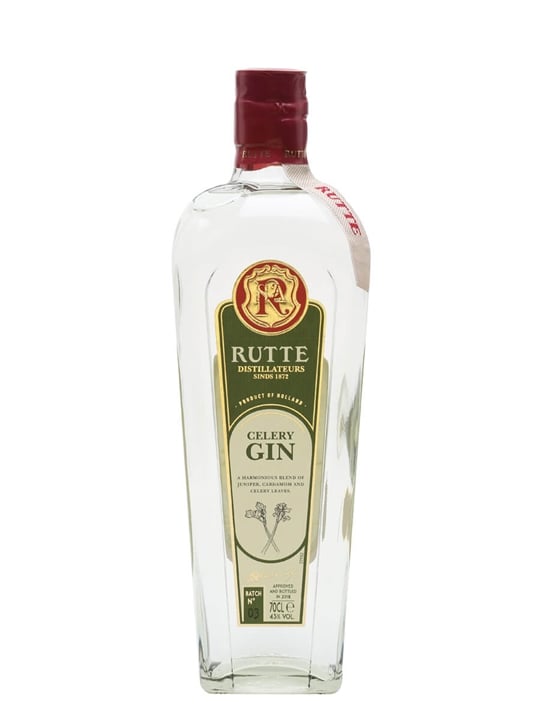
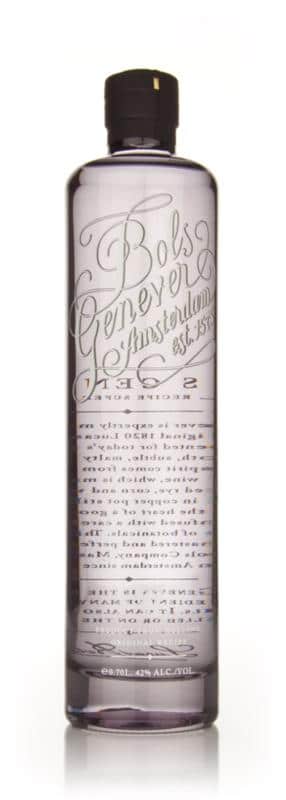
Genever is not a curiosity. It is not a historical footnote. It is a living spirit, still produced with care and skill by distillers who have been doing so for centuries. Bols, founded in 1575, still makes genever in Amsterdam. De Kuyper, Rutte, and Zuidam produce superb examples in the Netherlands. In Belgium, Filliers and Smeets carry on the tradition with distinction.
To drink genever is to taste gin's past — to understand where the spirit came from, what it once was, and how it evolved into the London Dry we know today. It is also to discover a spirit of remarkable complexity, warmth, and character that deserves to be judged on its own merits, not merely as a precursor to something else.
The windmills are still turning in Schiedam. The grain is still being ground. The spirit is still being made. All it needs is for the rest of the world to remember it exists.