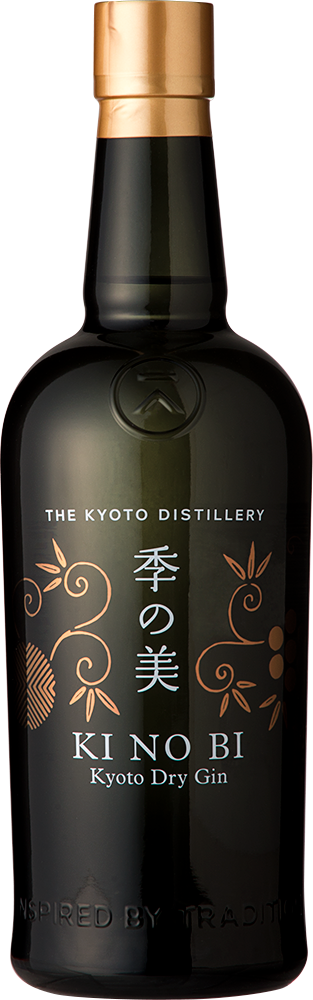

The Kyoto Distillery sits at the end of a quiet residential street in the Fushimi ward, a neighbourhood better known for its sake breweries and its shrine to Inari, the fox god of rice and prosperity. It is an unassuming building — clean lines, natural wood, a courtyard garden with raked gravel — and inside, in a room that smells of juniper and hinoki cypress, a small team is producing what many critics now consider among the finest gins in the world.
Ki No Bi, the distillery's flagship, was launched in 2016. Within two years, it had won gold at the International Wine & Spirit Competition and appeared on the back bars of cocktail lounges from London to New York to Singapore. Its success was remarkable, but what was more remarkable was how it achieved it: not by imitating London Dry, but by translating gin into an entirely Japanese idiom.
A Different Botanical Language
Japanese gin begins with juniper — it must, by definition — but from there, the grammar changes entirely. Where British distillers reach for coriander seed and angelica root, Japanese distillers reach for yuzu (a citrus so fragrant that a single fruit can perfume an entire room), sansho pepper (which creates a tingling, electric sensation on the tongue quite unlike any Western spice), hinoki wood (Japanese cypress, with its clean, medicinal, spa-like aroma), and gyokuro green tea (the finest grade of Japanese green tea, shaded for three weeks before harvest to concentrate its umami).
Ki No Bi distils its botanicals in six separate categories — base, citrus, tea, herbal, spice, and floral — and blends the distillates to achieve a precise balance. The result is a gin that tastes unmistakably of gin and unmistakably of Japan: juniper is there, but it is framed by yuzu's penetrating brightness, bamboo's green freshness, and hinoki's meditative calm.
Roku: Suntory's Seasonal Vision
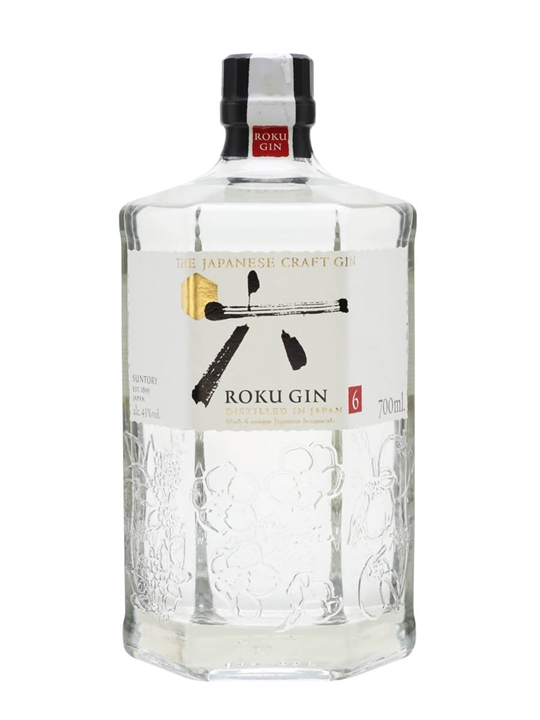
When Suntory — Japan's largest and most prestigious spirits company — decided to enter the gin category, it did so with characteristic ambition. Roku, launched in 2017, uses six Japanese botanicals layered over eight traditional gin botanicals. The Japanese ingredients are selected to represent the four seasons: sakura flower and sakura leaf for spring, sencha tea and gyokuro tea for summer, sansho pepper for autumn, and yuzu peel for winter.
Each seasonal botanical is distilled separately, at its peak of freshness, using the distillation method best suited to its character — pot distillation for the robust flavours, vacuum distillation for the delicate ones. The hex-faceted bottle itself is a reference to the six Japanese botanicals, and the attention to detail extends to every aspect of the brand, from the embossed kanji characters to the recommended serve (a G&T with a sliver of fresh ginger).
Tasting Roku is an exercise in recognising the familiar and being surprised by the unexpected. The juniper and coriander are there, a reassuring London Dry foundation, but layered over them is a quality that is hard to describe in Western spirits vocabulary — a delicacy, a restraint, an elegance that owes more to the aesthetics of kaiseki cuisine than to the traditions of London's gin palaces.
The Shochu Connection
Japan's gin revolution did not emerge from nowhere. The country has a centuries-old tradition of spirit distillation in the form of shochu, a distilled spirit made from sweet potato, barley, rice, or buckwheat. Shochu distillers, particularly in Kyushu (the southernmost of Japan's main islands), possessed the technical expertise, the copper pot stills, and the deep understanding of fermentation and distillation that gin production demands.
Several shochu producers have entered the gin market with impressive results. Komasa Gin, from Kagoshima, uses komikan mandarin — a tiny, intensely fragrant citrus native to the region — along with shiso leaf and juniper. Wa Bi Gin, from Okayama, incorporates Japanese red pine and sandalwood alongside classic gin botanicals. These gins carry the unmistakable fingerprint of shochu craftsmanship: a clarity of flavour, a precision of distillation, and a respect for raw ingredients that comes from a culture where the quality of water and the provenance of grain are discussed with the same seriousness that Westerners reserve for wine terroir.
Terroir and Philosophy
What unites Japanese gin, beyond the botanicals, is a philosophical approach to making that differs fundamentally from the Western tradition. In Britain, gin is often discussed in terms of boldness, strength, and juniper dominance. In Japan, the conversation centres on balance, harmony, and the interplay between ingredients. The concept of wa — harmony — runs through Japanese gin production as surely as it runs through the culture that produces it.
There is also the matter of terroir. Japanese distillers speak of their water sources — the soft, mineral-rich waters of Kyoto's Fushimi district, the pristine spring water of Hokkaido, the volcanic waters of Kagoshima — with a reverence that European gin producers are only beginning to adopt. Water is not an afterthought in Japanese gin; it is an ingredient, and its character shapes the final spirit as surely as any botanical.
Where Next?
The Japanese gin market is still young — Ki No Bi is barely a decade old — but its influence is already global. Bartenders in London, New York, and Singapore now stock Japanese gins as a matter of course. Suntory's Roku has become one of the fastest-growing premium gin brands in the world. And a new generation of Japanese distillers is pushing further, experimenting with botanicals like wasabi, matcha, and shiso that have no precedent in the gin world.
Standing in the courtyard of the Kyoto Distillery on a winter morning, watching the steam rise from the still house and listening to the distant clang of the shrine bell, it occurred to me that Japanese distillers have done something that gin producers in other countries are still struggling to achieve: they have made a gin that is both authentically gin and authentically, irreducibly themselves. In doing so, they have given the spirit a future as rich and varied as its past.