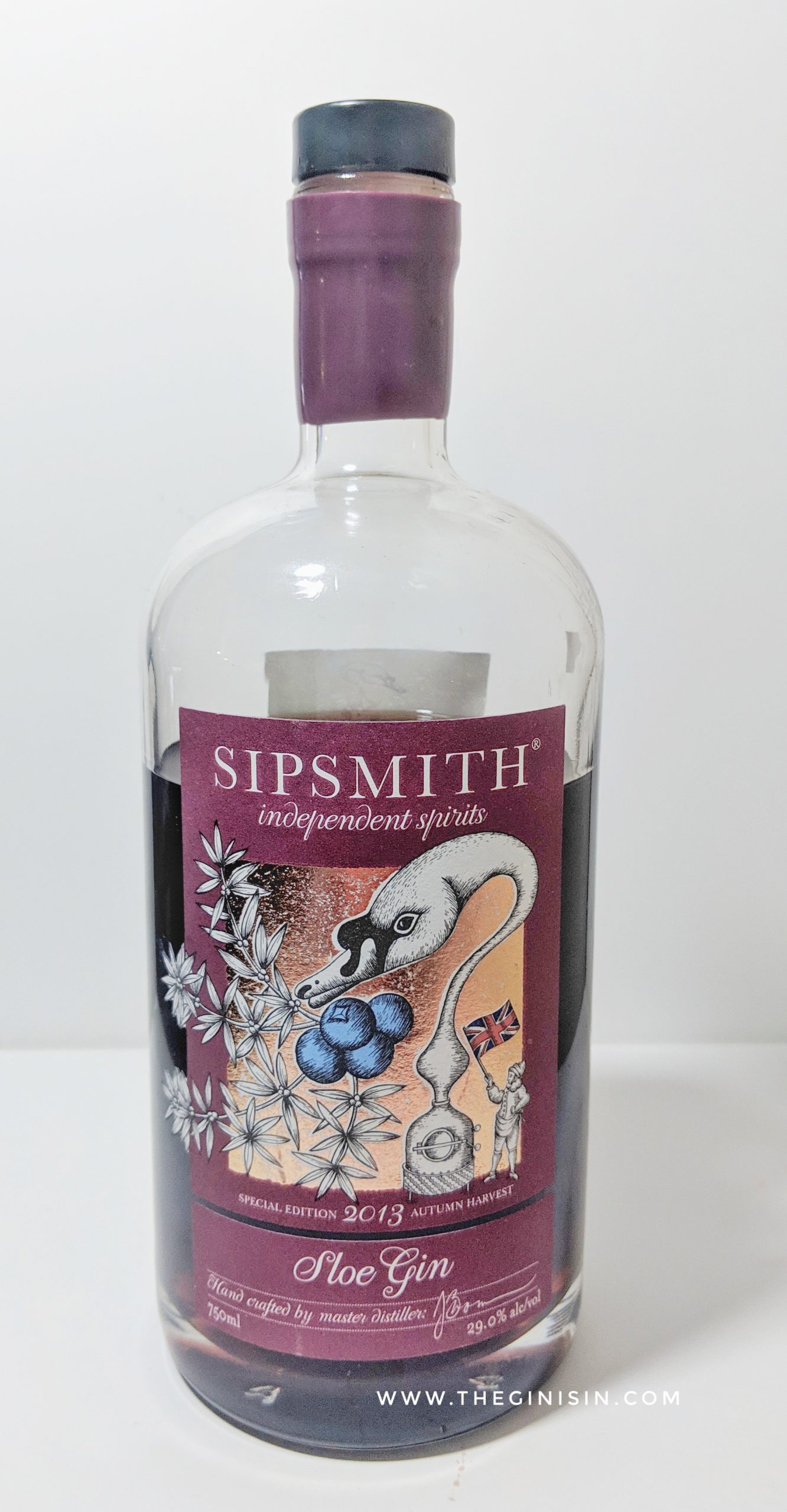

Sloe gin occupies an unusual position in the gin family. Technically a liqueur rather than a gin — the sugar content and lower ABV disqualify it from the EU's gin classification — it nonetheless has deep roots in British drinking culture. For centuries, making sloe gin was a domestic ritual: foraging blackthorn berries in late autumn, pricking them with a silver pin, and steeping them in gin with sugar until Christmas. Sipsmith's version industrialises this process with care, producing a sloe gin that honours the tradition while achieving a consistency and quality that homemade versions rarely match.
The base spirit is Sipsmith's London Dry, which provides a firm juniper backbone. The sloe berries are hand-picked from hedgerows in the English countryside and steeped in the gin for several months. Sugar is added, but judiciously — Sipsmith uses less than many competitors, resulting in a drier, more gin-forward style.
On the Nose
The nose is immediately appealing: ripe berry fruit — think damson, blackberry, and plum — with a clear gin structure beneath. The juniper from the base spirit provides an herbal anchor, and there's a subtle almond note that comes from the sloe stones steeping alongside the fruit. A gentle sweetness is present but not cloying, and there's a fresh, slightly tart quality that suggests the berries were in good condition.
The Palate
On the palate, this is sloe gin at its most accomplished. The berry fruit is rich and complex — not the simple, jam-like sweetness of cheaper sloe gins but a multi-layered fruitiness that includes tart, sweet, and bitter elements. The gin base asserts itself on the mid-palate, with juniper cutting through the fruit and providing structure. The sweetness is well-judged: enough to balance the natural tartness of the sloes without overwhelming the palate. At 29% ABV, it has enough alcoholic presence to feel like a proper spirit drink rather than a cordial.
The Finish
The finish is medium-long and pleasantly complex. The berry fruit lingers, gradually becoming more tart as the sugar fades, and the juniper provides a dry, herbal conclusion. There's a gentle warmth and a final almond-marzipan note from the stones that adds sophistication.
How to Enjoy It
Neat, over ice, is the traditional serve, and it works beautifully — the cold temperature tightens the flavours and brings out the tartness. In a Sloe Gin Fizz (sloe gin, lemon juice, soda, and sugar), it's magnificent — the berry fruit provides depth that makes the drink far more interesting than a standard gin fizz. And in a Sloe Negroni — replacing the gin with sloe gin — it creates a sweeter, fruitier variation that works surprisingly well as a winter aperitif.
Perhaps the most quintessentially English serve is sloe gin and tonic, which transforms the standard G&T into something richer and more autumnal. Use a light tonic and garnish with a few fresh blackberries to complement the sloe fruit.
Sipsmith's Sloe Gin demonstrates what happens when a quality-focused distillery turns its attention to a category often dominated by mass-market mediocrity. The result is a sloe gin that rewards serious attention — complex, balanced, and thoroughly enjoyable. It makes a compelling case that sloe gin deserves to be taken as seriously as any other style.