
Heritage & Distillery
The founding of Sipsmith in 2009 was, in retrospect, a watershed moment for British gin. When Sam Galsworthy, Fairfax Hall, and master distiller Jared Brown set out to establish a copper pot distillery in Hammersmith, west London, they discovered that no new distilling licence for a copper pot still had been issued in London since 1820. The regulatory battle that followed — requiring an actual change to the law — became something of a cause célèbre, and when Sipsmith finally received its licence, it opened the floodgates for what would become the modern craft gin movement.
The distillery's first still, a 300-litre Christian Carl copper pot named Prudence, produced the inaugural batch of Sipsmith London Dry in March 2009. Two further stills — Patience and Constance — have since joined the operation, though the approach remains resolutely small-batch. Each run is personally overseen, and every bottle carries the batch number from which it was drawn. In an industry increasingly dominated by industrial-scale production, this commitment to craft is genuinely meaningful.
Sipsmith was acquired by Beam Suntory in 2016, a move that raised predictable concerns about the dilution of quality. Having tasted the gin regularly since that acquisition, I can report that those concerns have proved largely unfounded. The liquid in the bottle today is indistinguishable from what I tasted in those early years. The recipe and the method have been preserved with commendable fidelity.
Production
Sipsmith's London Dry is distilled in traditional copper pot stills using a one-shot method — all ten botanicals are added to the still together with the base spirit, rather than being distilled separately and blended. This approach requires considerable skill, as each botanical has its own optimal extraction temperature and time, but when executed well, it produces a spirit of genuine integration.
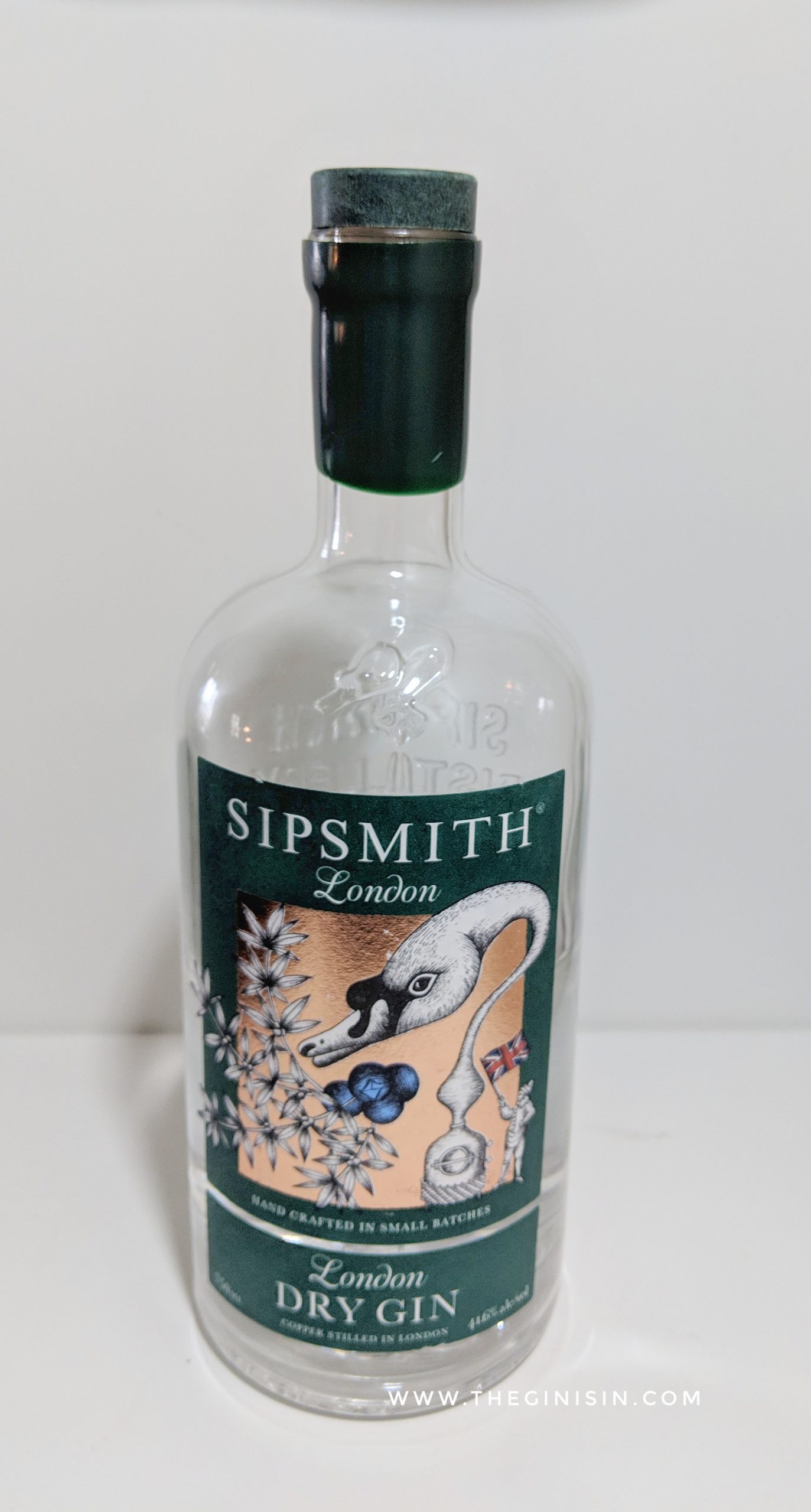
The botanical bill is classical in its composition: juniper, coriander seed, angelica root, liquorice root, orris root, ground almond, cassia bark, cinnamon, Seville orange peel, and lemon peel. It is, in essence, a traditional London Dry recipe — nothing wildly unusual, no exotic additions, just ten well-chosen ingredients in careful proportion. The distinction lies in the sourcing and the execution. Sipsmith's botanicals are selected with notable care, and the small-batch distillation allows for precise control over the cut points.
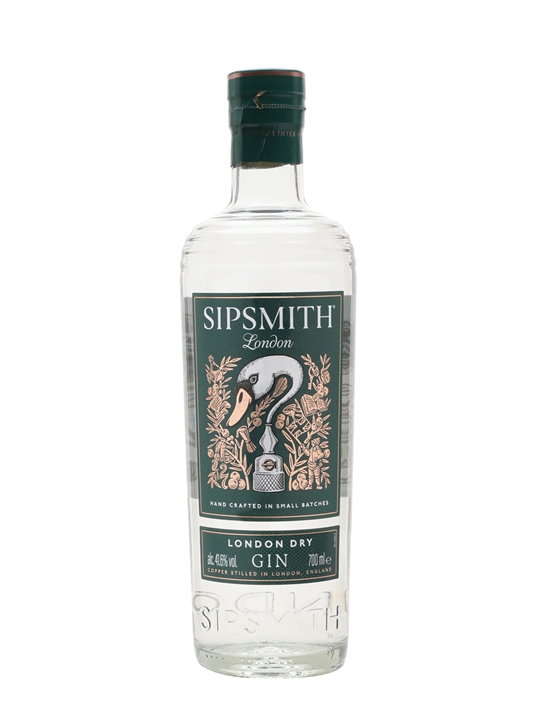
The spirit is bottled at 41.6% ABV — slightly above the minimum for London Dry and a strength that gives the gin a touch more body and presence than a standard 40% bottling without the assertiveness of a navy-strength expression.
Tasting Notes
On the nose, Sipsmith London Dry is immediately appealing. The juniper is bold and lively, with a fresh, almost meadow-like quality that distinguishes it from the more resinous juniper character of some competitors. Lemon zest follows swiftly, bright and clean, and behind it a warm spice note from the cinnamon and cassia bark that adds complexity without heaviness. Angelica root provides a dry, earthy foundation, while orris root contributes a subtle, powdery floral note — reminiscent of violets — that is quietly elegant. There is a faint sweetness from the ground almond, barely perceptible but adding a sense of depth.
The palate is rounded and generous. The 41.6% ABV provides a pleasing fullness without any alcoholic heat. Juniper is assured and confident — the clear protagonist — but the coriander seed warmth is more prominent here, lending a gentle peppery spice. Seville orange peel brings a pleasant bitterness at the mid-palate, beautifully balanced by a soft liquorice sweetness. The cassia and cinnamon add a warm, woody dimension that emerges gradually. Perhaps most distinctive is the mouthfeel: there is a creaminess, almost certainly contributed by the ground almond, that gives the gin a tactile, silky quality.
The finish is medium-long and satisfying. Juniper and the warm spices persist in roughly equal measure, fading gradually and harmoniously. The cinnamon and cassia are the last to depart, leaving behind a dry, orris-tinged elegance that is clean and well-resolved.
The Serve
Sipsmith's own recommended serve — a 1:2 ratio with Fever-Tree Indian Tonic, garnished with a slice of lemon — is, in truth, hard to improve upon. The tonic's quinine bitterness plays beautifully against the gin's warm spices, and the lemon garnish amplifies the existing citrus notes without overwhelming them. It is a serve of real balance.
For cocktails, Sipsmith makes an excellent Tom Collins. Its slightly creamy texture and warm spice character bring genuine interest to this often-overlooked classic. Combine 50ml Sipsmith, 25ml fresh lemon juice, 15ml sugar syrup, and top with soda in a tall glass over ice. The result is refreshing, complex, and thoroughly civilised.
Verdict
Sipsmith London Dry is a gin that achieves something rather difficult: it is both traditional and distinctive. The recipe is classical, the method is time-honoured, yet the resulting spirit has a character that is unmistakably its own — that particular combination of lively juniper, warm spice, and creamy texture sets it apart from its peers. It is a gin that feels crafted rather than manufactured, considered rather than formulaic. At its price point, it represents strong value for the quality on offer, and it has earned its place as one of the benchmarks of the modern London Dry category. The revolution that Sipsmith helped to start continues to unfold, but the original expression remains one of its finest products.