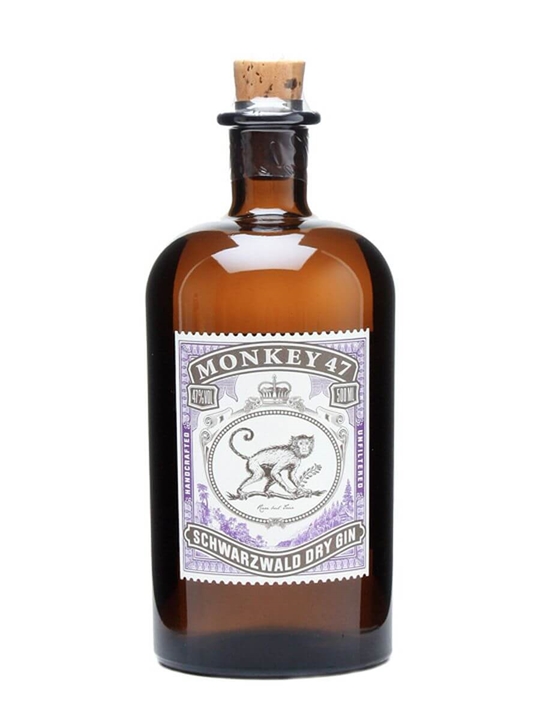
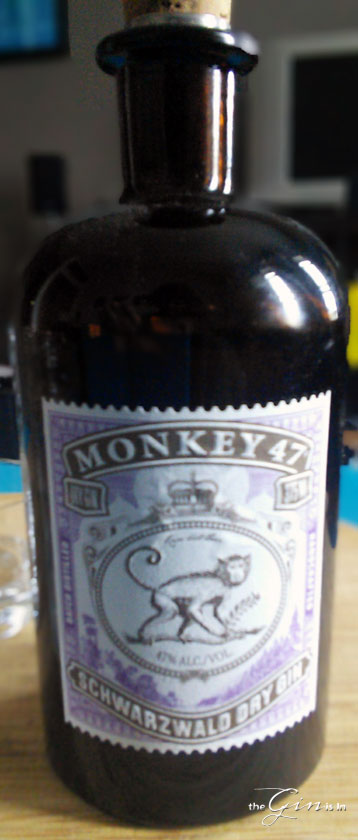

Monkey 47, the Black Forest dry gin produced in the village of Lossburg in south-west Germany, has been named Supreme Champion at the 2025 International Spirits Challenge — the highest honour in what is widely regarded as the most rigorous blind-tasting competition in the global spirits industry. The gin, which uses 47 botanicals sourced from the Black Forest and the Himalayas, beat over 1,700 entries across all spirit categories to take the title, marking the first time a gin has won the supreme award since Tanqueray No. Ten in 2018.
The announcement was made at a ceremony at the Guildhall in London last Thursday evening, and I can report that the room's reaction was one of genuine delight rather than surprise. Monkey 47 has been accumulating gold medals and category wins for the better part of a decade, and its elevation to supreme champion feels less like a shock result and more like a long-overdue coronation.
The Details
The ISC's judging process is deliberately arduous. Over 400 judges — including Master Distillers, Masters of Wine, and senior spirits buyers — taste entries blind over a series of rounds spanning three months. Medals are awarded at bronze, silver, and gold levels, with trophy winners selected from the golds. The Supreme Champion is then chosen from the trophy winners by a final panel of twelve senior judges.
"This was a unanimous decision, which is rare," said Karen Taylor, Chair of the ISC's spirits judging panel. "Monkey 47 displayed extraordinary complexity, balance, and length. It was clearly a gin of exceptional quality, and the fact that it triumphed over outstanding whisky, rum, and cognac entries speaks to its sheer brilliance as a spirit."
Alexander Stein, Monkey 47's founder and creator, accepted the award with characteristic understatement. "We make this gin in a very small distillery in a very small village in the Black Forest," he said. "That it has been recognised in this way is deeply moving. But the real credit belongs to the 47 botanicals — they do most of the work."
Stein, who founded the brand in 2010 after discovering the history of a British RAF commander who had settled in the Black Forest after World War II and begun experimenting with local botanicals, has built Monkey 47 into one of the most respected and sought-after gins in the world. The brand was acquired by Pernod Ricard in 2016 but continues to operate with considerable independence from its original distillery.
The gin itself is a remarkable creation. Each batch uses exactly 47 botanicals — including cranberries from the Black Forest, lingonberries, acacia flowers, lavender, and a freshwater algae sourced from a single pond near the distillery. The spirit is distilled in a small copper pot still and rested in earthenware vessels for three months before bottling at 47% ABV. Production is deliberately limited to preserve quality, and allocations in some markets remain tight.
Industry Context
The ISC win is significant for several reasons beyond the obvious commercial boost it will give Monkey 47. First, it validates gin's status as a spirit category capable of competing at the highest level against aged spirits like whisky and cognac, which have traditionally dominated the supreme champion roll of honour. Of the ISC's 30 supreme champions since the award's inception in 1995, only three have been gins — a statistic that has long irked gin producers who feel the category is treated as less serious than its brown spirit counterparts.
"There's an ingrained bias in the spirits world that aged equals superior," said Ian McLaren, a veteran spirits judge who sat on this year's final panel. "Gin doesn't have the luxury of oak maturation to mask flaws — it has to be perfect from the still. In many ways, making a truly great gin is harder than making a truly great whisky. This win recognises that."
Second, the win is a triumph for European craft distilling. While the UK dominates gin production by volume, Germany has quietly built one of the world's most innovative gin scenes. Alongside Monkey 47, producers like Windspiel, Ferdinand's, and Siegfried have garnered international acclaim. The ISC win will further cement Germany's reputation as a serious gin-producing nation.
For Pernod Ricard, which paid a reported €70 million for Monkey 47 in 2016, the win validates what many at the time considered a steep price for a brand producing fewer than 200,000 bottles annually. The brand's value has grown substantially since the acquisition, and the ISC title will only accelerate that trajectory.
"Monkey 47 was expensive when we bought it, and it's been worth every cent," one Pernod Ricard executive told me at the ceremony, requesting anonymity to speak freely. "It's our proof point that small-batch, uncompromising quality can coexist with global distribution. We've learned a lot from Alexander."
What's Next
Stein has indicated that the ISC win will not change Monkey 47's production approach. "We will not increase volumes to meet demand created by this award," he said firmly. "The quality comes from the constraints — the small still, the specific botanicals, the patience. Remove the constraints and you remove the quality."
This stance — admirable, infuriating, or both, depending on your perspective — means that Monkey 47 is likely to become even harder to find in 2026. Prices on the secondary market, already elevated, will almost certainly rise. For collectors, a bottle of the current batch — produced in the same year as the supreme champion win — may prove particularly valuable.
For the broader gin industry, the win is a morale boost and a reminder that gin, at its best, is the equal of any spirit in the world. Forty-seven botanicals, a small still in the Black Forest, and a supreme champion's trophy. Not a bad story.