
Japan's gin exports more than doubled in 2025, rising 104% by value to reach ¥8.2 billion (approximately £42 million), according to data from the Japan Spirits & Liqueurs Makers Association released this week. The figures confirm what many of us in the trade have been observing for some time: Japanese gin has moved from curiosity to credible category contender, riding the coattails of Japanese whisky's global dominance while establishing a distinct identity rooted in native botanicals and meticulous craftsmanship.
I visited three Japanese distilleries last autumn — Ki No Bi's Kyoto Distillery, Nikka's facility in Miyagi, and Suntory's Osaka operation — and came away convinced that Japan's gin story is only just beginning. What these producers share is a cultural commitment to precision that translates into gins of extraordinary clarity and balance.
The Details
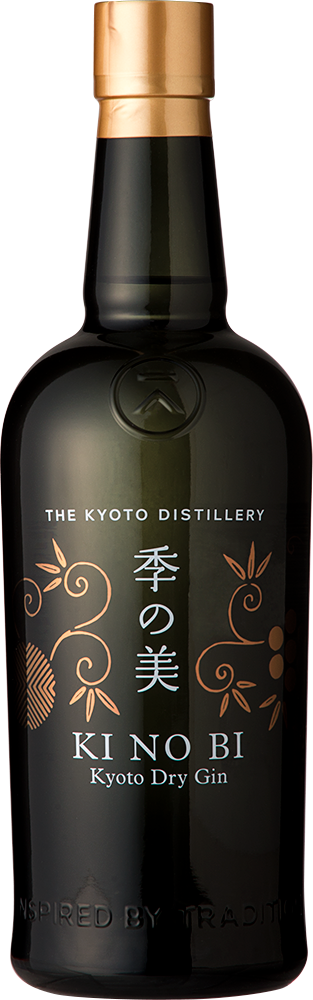
The export surge has been led by three brands that have become standard-bearers for Japanese gin internationally. Ki No Bi, produced by the Kyoto Distillery — Japan's first dedicated gin distillery, established in 2014 — saw its exports grow by 87% in 2025, with the UK and Germany now its largest markets outside Japan. The brand's use of botanicals including yellow yuzu, hinoki wood, bamboo leaves, and gyokuro tea has given it a flavour profile unlike anything produced in Europe.
"We never set out to make a 'Japanese gin' as a marketing exercise," said Alex Davies, who co-founded the Kyoto Distillery with Marcin Miller. "We wanted to make the best gin we could using the best ingredients available to us — and in Kyoto, those ingredients happen to be Japanese. The identity followed naturally."
Nikka's Coffey Gin, distilled using the company's Coffey stills — continuous column stills originally imported from Scotland in 1963 — has become a bartender favourite, particularly in the United States, where it is now stocked in 43 states. Nikka's parent company, Asahi Group, has invested significantly in US distribution, leveraging the infrastructure already built for Nikka whisky.
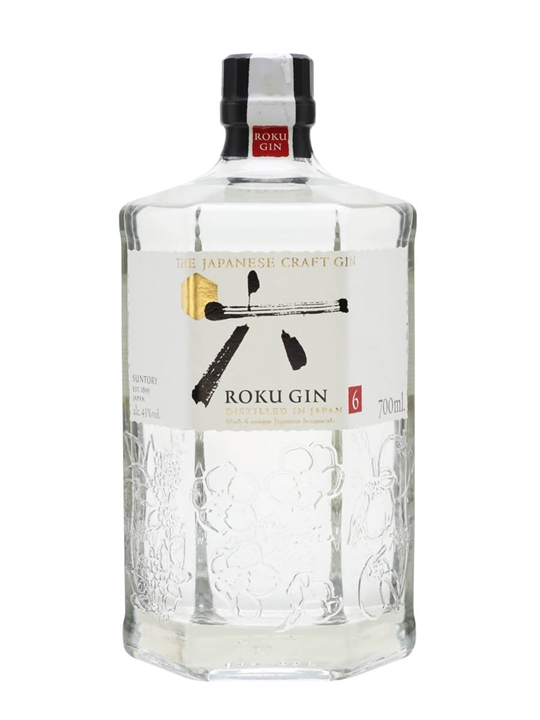
Suntory, meanwhile, has taken a different approach with Roku, positioning it as an accessible introduction to Japanese gin at a mid-premium price point. Roku uses six Japanese botanicals — sakura flower, sakura leaf, sencha tea, gyokuro tea, sansho pepper, and yuzu peel — alongside eight traditional gin botanicals. Its exports grew by 130% in 2025, the fastest of any Japanese gin, driven by aggressive distribution in European markets.
"Roku is designed to be the gateway," said Yumi Yoshida, Suntory's Global Gin Brand Director. "Once consumers discover the quality and distinctiveness of Japanese gin through Roku, they explore further — into Ki No Bi, into Nikka, into the craft producers. A rising tide lifts all boats."
Industry Context
Japan's gin boom did not emerge in a vacuum. It is, in many ways, a direct consequence of the Japanese whisky phenomenon. As Japanese whisky brands swept international awards and commanded ever-higher prices, global consumers developed an appreciation for Japanese craftsmanship in spirits that extended beyond any single category. Gin producers have been adept at leveraging this halo effect.
But Japanese gin has also benefited from a more specific trend: the global appetite for botanical diversity. As drinkers tire of conventional juniper-forward London Dry profiles, they are seeking gins that offer unfamiliar flavour experiences. Japanese producers, with access to a botanical palette that includes ingredients virtually unknown in Western distilling, are uniquely positioned to meet this demand.
The domestic market is also healthy. Gin consumption within Japan grew by 15% in 2025, driven partly by the popularity of gin highballs — the gin equivalent of the whisky highball that has become Japan's national serve. The gin and tonic, traditionally a niche order in Japanese bars, is now mainstream in Tokyo, Osaka, and Kyoto.
"Japan's bartending culture is arguably the finest in the world," said Kayoko Ono, spirits writer and author of The Japanese Bar. "When Japan's bartenders embraced gin, it gave the category an enormous credibility boost domestically. The quality of serves in Japanese bars has, in turn, become a marketing tool internationally — people visit Tokyo, experience a perfect gin and tonic at a Ginza bar, and go home wanting to recreate it."
The number of gin distilleries in Japan has grown from just two in 2016 to 28 at the end of 2025. While this is modest by UK standards, the rate of growth and the consistent quality of output is notable. Several smaller producers — including Etsu from Hokkaido and Wa Bi Gin from Nara — are beginning to appear in specialist retailers outside Japan.
What's Next
The Japan Spirits & Liqueurs Makers Association has set a target of ¥15 billion in gin exports by 2028, a goal that would require continued annual growth of approximately 25%. This is ambitious but not unrealistic given current momentum and the investments being made in international distribution.
The key challenge for Japanese gin producers is supply. Unlike Scotch whisky, which benefits from vast production capacity built up over centuries, Japanese gin distilleries are mostly small-scale. Ki No Bi has already faced allocation issues in certain markets, and Nikka has had to limit Coffey Gin availability in Asia to meet European demand.
Watch, too, for the emergence of aged Japanese gin. Suntory is known to be experimenting with resting Roku in mizunara oak — the prized Japanese oak traditionally used for whisky maturation — and at least two craft producers are exploring plum wine cask finishes. If Japanese aged gin achieves even a fraction of the cachet of Japanese aged whisky, the commercial implications could be extraordinary.
For now, the numbers speak clearly enough. Japanese gin has arrived, and the world is drinking.